
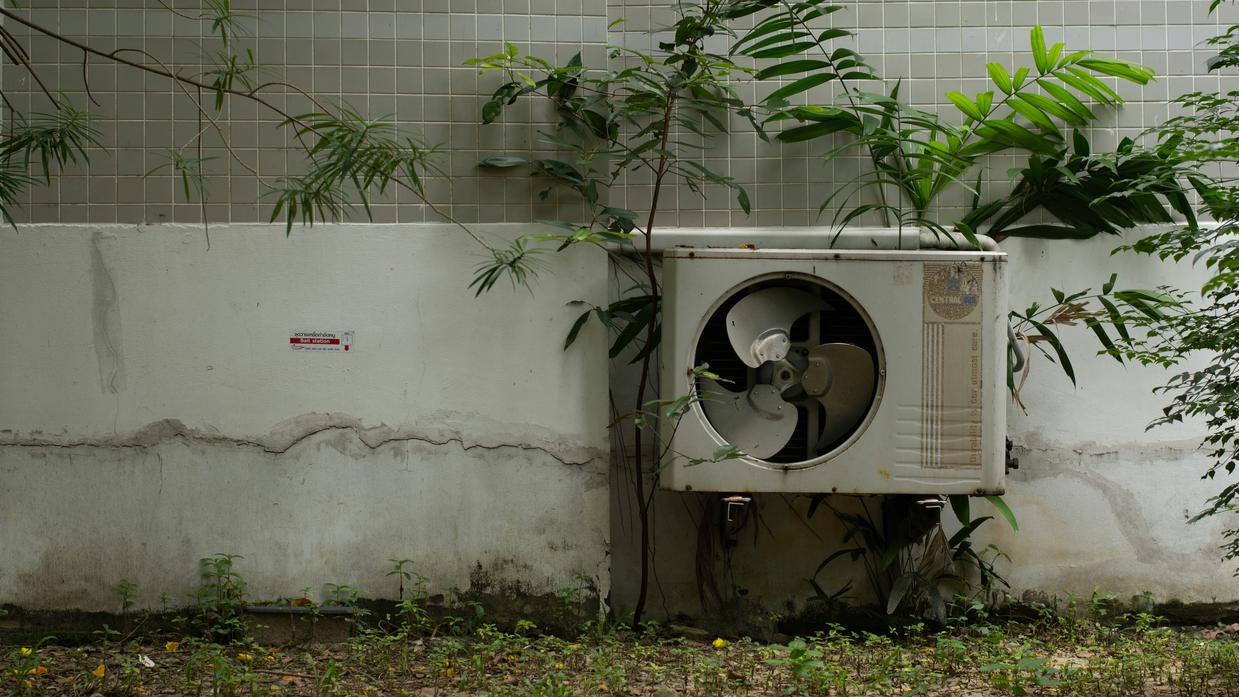
Your AC just stopped working and your apartment feels like a sauna.
You’re standing there wondering if you should try to fix it yourself, call your landlord, or just suffer through it. And honestly, you’re not even sure what your lease says about this stuff.
I’ve dealt with hundreds of tenant maintenance requests over the years. The biggest mistake people make? They wait too long or handle it the wrong way, which just drags out the misery.
Here’s the thing: most AC problems in apartments follow a pattern. Some you can fix in five minutes. Others require your landlord to act fast.
This guide walks you through exactly what to do when your AC breaks. I’ll show you what to check first, how to talk to your landlord so they actually respond quickly, and what your rights are as a tenant.
How can I repair my aircon appcproperty the right way? Start by understanding what you’re allowed to touch and what you’re not.
You’ll know within minutes whether this is a quick fix or something that needs professional help. And you’ll know exactly how to get your landlord moving if it’s their responsibility.
No guessing. Just a clear plan to get cool air flowing again.
Before You Call: 5-Minute Checks You Can Safely Perform
Your AC stops working on the hottest day of summer.
Of course it does.
Before you call someone (and wait hours for them to show up), I want you to try something. Five simple checks that take maybe five minutes total.
I’ve talked to dozens of HVAC techs over the years. One guy told me, “Half my service calls? The tenant just needed to flip a breaker or change a filter.”
Half.
So let’s start there.
Check your thermostat first. Is it set to cool? Is the target temperature actually lower than what your apartment is right now? And yeah, check the batteries. I know it sounds basic, but dead batteries kill more AC units than you’d think.
Next, find your circuit breaker. Look for the switch labeled AC or HVAC. If it’s tripped, it’ll be in the middle position or flipped to off. Turn it all the way off, then back on. Just once (don’t keep flipping it if nothing happens).
Now check your air filter. This is the big one. A clogged filter is the most common reason your AC quits. You’ll usually find it in a slot on your indoor unit. Pull it out. If it looks like it’s been through a dust storm, replace it if you have a spare.
Walk around and check your vents. Are they all open? I’ve seen people block vents with furniture and wonder why their place won’t cool down. Make sure nothing’s covering them.
Finally, look at your condensate drain line. It’s that PVC pipe coming from your indoor unit. See any standing water or drips where there shouldn’t be? That’s probably a clog.
If you’re still stuck after these checks, you can learn more about how can i repair my aircon appcproperty or call a professional.
But try these first. You might save yourself a service call.
Your Rights as a Tenant: Understanding the ‘Warranty of Habitability’
Think of the warranty of habitability like a baseline promise.
When you rent an apartment, your landlord isn’t just handing you keys to four walls and a roof. They’re guaranteeing that the place meets basic living standards. Heat in winter. Working plumbing. A structure that won’t collapse on you.
In most states, this legal concept means your landlord has to provide a safe and livable home. Period.
And here’s where it gets interesting for anyone sweating through summer right now. Many cities classify functioning AC as part of this warranty during hot months. Not everywhere, but the list is growing.
Start with your lease agreement.
Your lease is the rulebook for your specific situation. Look for sections about appliance maintenance and repair timelines. Most leases spell out how quickly your landlord needs to respond to repair requests (usually 24 to 72 hours for urgent issues).
But your lease doesn’t exist in a vacuum.
Local laws can override what’s written in your contract. Tenant rights shift wildly depending on where you live. What flies in Phoenix won’t necessarily work in Chicago.
I always tell people to search [Your City] tenant rights air conditioning online. You’ll find city ordinances and state laws that might classify AC as essential. Some cities require it when temperatures hit certain thresholds. Others don’t mention it at all.
Here’s a distinction that matters:
- AC came with the apartment – Usually the landlord’s job to fix
- You brought your own window unit – That’s on you
If you’re wondering how can i repair my aircon appcproperty, the answer depends on who owns the unit and what your lease says about maintenance responsibilities.
The warranty of habitability gives you leverage. But only if you know what it covers in your specific location.
How to Report the Issue for the Fastest Response
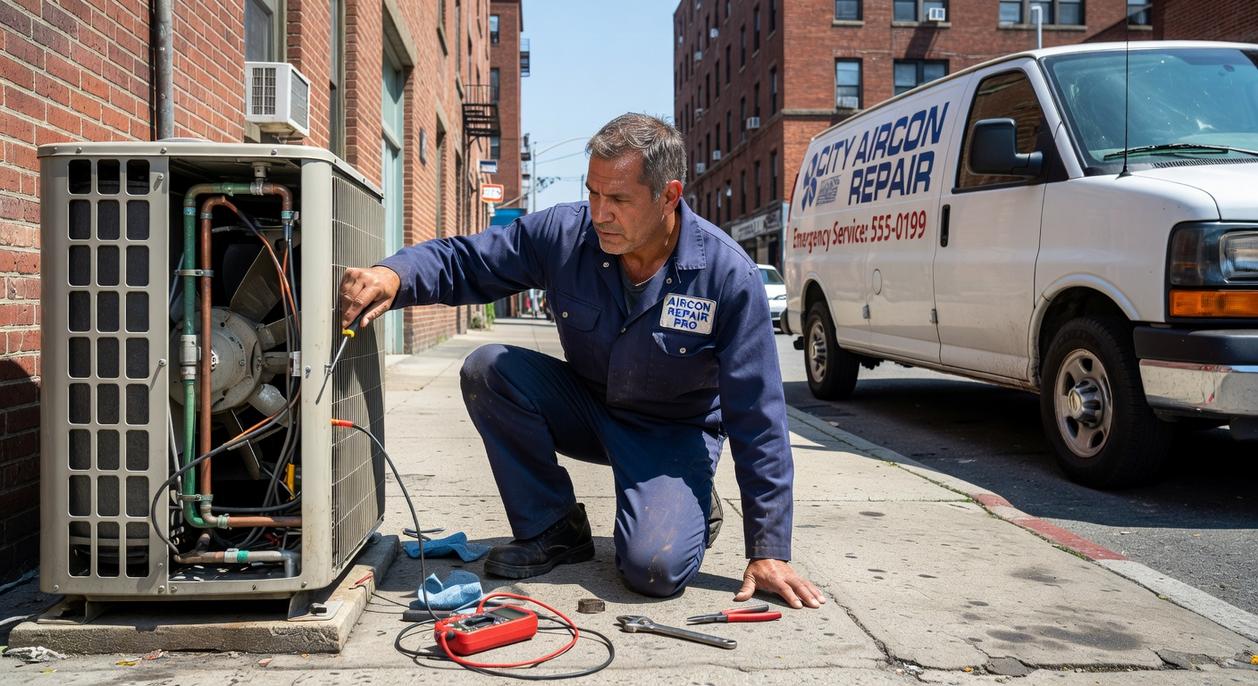
You know what most tenants do wrong?
They call their landlord, explain the problem, and think they’re done.
Then two weeks later they’re still sweating in a broken apartment wondering why nothing’s happened.
Here’s what I tell people. A phone call is fine to start. But if you don’t follow up in writing, you’ve got nothing to stand on.
I had a tenant once tell me, “I called three times about my AC and nobody did anything.” When I checked our records? No emails. No portal requests. Just her word against the property manager’s memory.
That’s a losing battle.
Always put it in writing. Send an email or submit a request through your tenant portal. This gives you a time-stamped record that nobody can dispute.
Now let me show you what a good maintenance request looks like.
Start with your full name and apartment number. Then write a clear description of the problem. Don’t say “my AC is broken.” Say “AC unit is running but not blowing cold air.” Include the date you first noticed the issue.
That’s it. Simple and specific.
One property manager told me, “Half the requests I get are so vague I have to call the tenant back just to figure out what’s wrong.” Don’t be that person.
Document everything. Keep a log of who you talked to and when. Save every email. If your AC is leaking or making weird noises, take a video. (Your phone is right there anyway.)
I know it feels like overkill. But if you end up needing to break your lease or file a complaint, this documentation is what saves you.
So what’s a reasonable timeline for repairs?
It depends on where you live and how serious the problem is. A broken AC in July? That’s usually considered an emergency in most states. Your landlord should respond within 24 to 48 hours.
A squeaky cabinet door? That can wait a week or two.
Most local housing codes spell this out. In Chicago, landlords have to start repairs within 14 days for non-emergency issues. Emergency repairs need to start right away.
But here’s the thing nobody tells you.
“Reasonable” isn’t just about what the law says. It’s also about what a judge would think is fair. If you’re dealing with something that affects your health or safety, waiting two weeks isn’t reasonable even if it’s technically legal.
One tenant asked me, “How can I repair my aircon appcproperty if my landlord won’t respond?” The answer is you probably can’t. And you shouldn’t try. Most leases say you can’t make repairs yourself without permission.
What you can do is keep pushing. Send another email. Reference your first request. Be polite but firm.
Something like: “This is my second request regarding the AC issue in unit 4B. The problem started on July 15th and has not been addressed. Please let me know when repairs will begin.”
Short. Direct. Hard to ignore.
And if you want to avoid issues altogether? Learn what maintenance red flags to watch for before you even sign a lease. Things like carpet cleaning myths appcproperty landlords use to dodge their responsibilities can tell you a lot about how they’ll handle real problems.
The bottom line is this.
Your landlord has a legal duty to fix things. But you have to make it easy for them to ignore you or easy for them to help you.
Written requests make it easy to help you.
Common AC Problems (And Why a Pro Must Handle Them)
You hear a hissing sound coming from your AC unit.
Or maybe the air blowing out feels more like a gentle breeze than actual cold air.
Refrigerant leaks show up like this. You might notice ice forming on the copper lines or that hissing noise that sounds like air escaping from a tire. Some people think they can just top off the refrigerant themselves.
Here’s why that won’t work.
Refrigerant systems are sealed. If you’re losing refrigerant, there’s a leak somewhere. A licensed technician needs to find it, fix it, and then recharge the system with the exact amount your unit needs. Too much or too little? Your AC won’t work right and you might damage the compressor.
Speaking of compressors.
Compressor failure is the big one. This is the part in your outdoor unit that actually pumps refrigerant through the system. When it dies, your whole AC stops cooling. You’ll hear clicking sounds or nothing at all when the system tries to start.
This repair isn’t cheap. We’re talking thousands of dollars in most cases. But trying to replace it yourself? That’s not happening unless you have specialized tools and EPA certification.
Electrical control failure is another problem I see all the time. Your capacitors store the electrical charge needed to start the compressor and fan motors. Contactors are basically heavy-duty switches that control power flow.
When these fail, your AC might not start at all. Or it starts and stops randomly.
The real issue here is safety. You’re dealing with high voltage electricity. One wrong move and you’re looking at serious injury or a fire hazard. This is exactly why pros carry insurance and you probably don’t want to mess with your electrical panel.
Then there’s frozen evaporator coils.
You open up your indoor unit and see ice everywhere. It looks like something out of a freezer. Most people think the solution is simple: let it thaw and you’re good to go.
Not quite.
Ice buildup is a symptom. The actual problem could be a refrigerant leak, a clogged filter that’s been ignored for months, or blocked return vents. If you’re wondering how can i repair my aircon appcproperty, the honest answer is that frozen coils need a trained eye to diagnose what’s really wrong.
Just thawing the ice means it’ll freeze again in a few days.
Look, I get the appeal of DIY repairs. You save money and feel accomplished. But AC systems are different from fixing a leaky faucet. The equipment is expensive, the refrigerant is regulated, and the electrical components can hurt you.
Call a licensed HVAC tech. It costs more upfront but saves you from making an expensive problem worse.
Your Path to a Cool, Comfortable Apartment
You came here because your apartment feels like an oven.
I get it. A broken AC isn’t just annoying. It affects your sleep, your productivity, and honestly, your sanity.
The good news? You have options. Most AC problems fall into two categories: things you can fix yourself in five minutes and things your landlord needs to handle.
This guide walks you through both. You’ll know exactly what to check first and how to get your property manager moving if the problem is bigger.
I’ve seen tenants suffer through heat waves because they didn’t know their rights or how to document the issue properly. That’s not going to be you.
how can i repair my aircon appcproperty starts with understanding what you control and what requires professional help.
A hot apartment isn’t just uncomfortable. It can be a health risk, especially during summer months. Your lease guarantees you a habitable space.
Following a documented process protects you as a tenant. It also gets results faster because property managers respond to paper trails.
Here’s what to do right now: Start with the five-minute safety checks. Make sure your thermostat is set correctly and your filter isn’t clogged. If nothing changes after those basic fixes, send a written maintenance request to your property manager today. Include the date, specific symptoms, and any steps you’ve already taken.
The clock starts ticking once you put it in writing. That’s when the official repair process begins.
 Eryk Blaszczski