
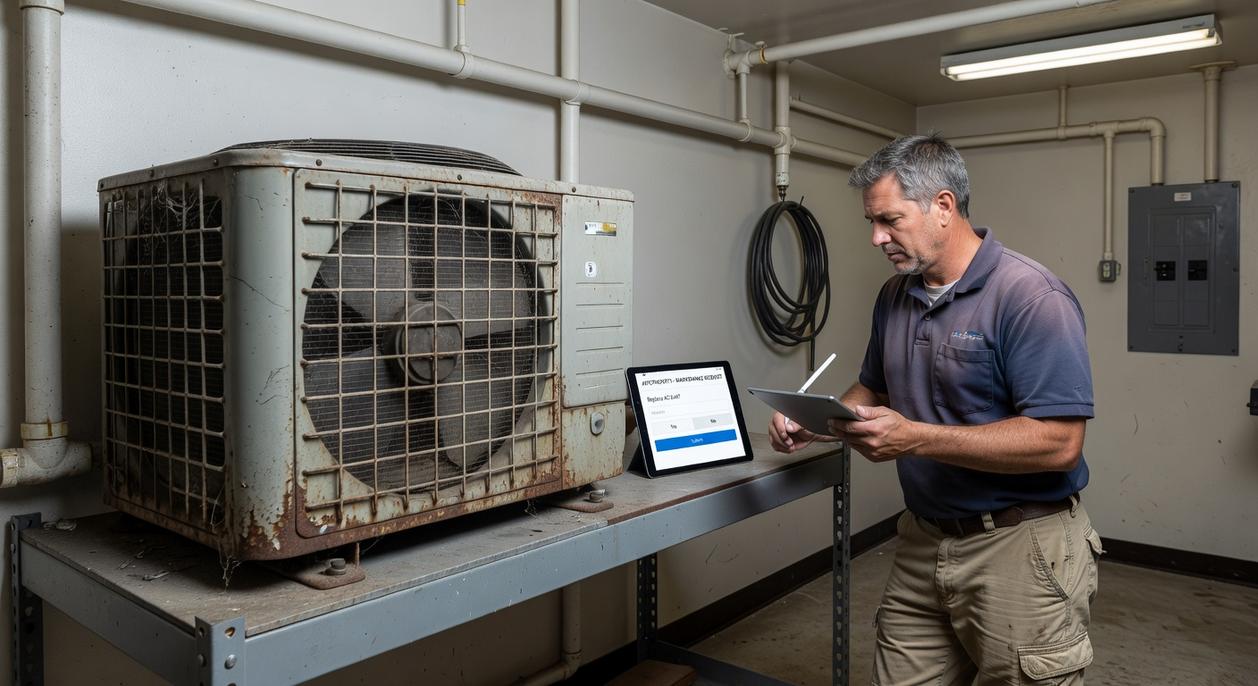
Your air conditioner just died in the middle of summer. Or maybe it’s limping along but your energy bills keep climbing.
Either way, you’re facing a big decision: repair or replace?
I know this isn’t easy. A new AC unit costs thousands of dollars. You want to make sure you’re spending that money at the right time and on the right system.
Most homeowners I talk to have the same questions. When is it actually time to replace? What size unit do I need? How do I know if I’m getting ripped off?
should i replace my aircon appcproperty
This guide walks you through the entire replacement process. I’ll show you the signs that mean it’s time for a new unit. We’ll cover how to choose the right system for your home and what to expect during installation.
I’ve helped property owners in Chicago navigate this decision for years. The process doesn’t have to be complicated if you know what to look for.
By the end of this guide, you’ll know exactly whether replacement makes sense for your situation. And if it does, you’ll know how to move forward without second guessing yourself.
First, The Big Question: Repair or Replace?
You’re staring at an estimate that makes your stomach drop.
Your AC tech just told you the repair will cost $2,800. And now you’re wondering if you should just bite the bullet and replace the whole thing.
I’ve been there. It’s a tough call.
But here’s what I tell people. There are five clear signals that tell you when replacement makes more sense than throwing good money at a dying unit.
How Old Is Your System?
Most AC units last between 10 and 15 years. That’s it.
If your system is pushing past the 12-year mark, efficiency starts dropping fast. You’re paying more to cool less space. The compressor works harder. Parts wear out quicker.
I saw this with a property on the South Side last summer. The unit was 14 years old and still running. But the owner’s electric bills had crept up 30% over three years without them really noticing.
When we finally replaced it, their cooling costs dropped immediately.
The 50% Rule Changes Everything
Here’s a simple guideline that saves people thousands.
If your repair costs more than 50% of what a new unit would cost, replace it. A new mid-range AC system runs about $5,000 to $7,000 installed (depending on your home size and setup).
So if that repair quote is over $2,500? You’re better off getting new equipment with a warranty.
Think about it. You spend $3,000 fixing an old unit today. Then what happens when the next part fails in six months?
Your Energy Bills Tell the Story
Pull up your electric bills from the last few summers.
See a pattern? If your cooling costs jumped 15% or more without you changing how you use the AC, something’s wrong. The unit is working overtime to do what it used to do easily.
This is one of those things people miss because it happens gradually. But should i replace my aircon appcproperty gets asked a lot when homeowners finally compare their bills year over year.
The numbers don’t lie.
Multiple Service Calls Mean Trouble
One repair? That’s normal maintenance.
But if you’re calling your HVAC guy twice in one season, or three times in two years, you’ve hit the tipping point. Your unit is telling you it’s done.
I had a tenant call me four times in one summer about their AC. Different issues each time. After the fourth call, I replaced the whole system. Should’ve done it after the second.
The R-22 Problem Nobody Talks About
Here’s something that catches people off guard.
If your AC uses R-22 refrigerant (also called Freon), you’re sitting on a ticking time bomb. The EPA phased out production of R-22 in 2020. What’s left is scarce and expensive.
A refrigerant recharge that used to cost $200 now runs $500 or more. And that price keeps climbing.
Newer systems use R-410A, which is cheaper and easier to find. If your tech mentions R-22, start planning for replacement now rather than later.
Understanding Your Options: Common Types of AC Systems
Most articles tell you to pick the right AC system for your home.
But they skip the part that actually matters.
Nobody talks about what happens when you choose wrong. I’ve walked through hundreds of properties where homeowners spent thousands on a system that fights their house instead of working with it.
Here’s what you need to know about your options.
Central Air Conditioners (Split Systems)
This is what most people think of when they hear “air conditioning.” You’ve got an outdoor unit sitting next to your house and an indoor unit connected through ductwork.
The whole system works together to cool every room. If you already have ducts running through your walls, this is usually your simplest path forward.
But here’s what the HVAC guys won’t tell you upfront. Your existing ductwork might be leaking 20% to 30% of your cooled air into your attic or crawl space (according to Energy Star data). That’s money you’re throwing away every month.
Ductless Mini-Split Systems
No ducts? No problem.
These systems mount directly on your wall with a small outdoor compressor. You can cool one room or set up multiple units throughout your house.
I see these in older Chicago homes all the time. The kind built before central air was standard. They’re also perfect when you finish a basement or add a sunroom and don’t want to mess with your existing ductwork.
The efficiency is real. You’re not losing air through leaky ducts because there aren’t any ducts to leak.
Heat Pumps
This is where it gets interesting.
A heat pump cools your house in summer just like a regular AC. But flip a switch and it heats your home in winter too. Same equipment, opposite direction.
Some contractors will tell you heat pumps don’t work in cold climates. That used to be true. Modern cold-climate heat pumps work fine down to negative temperatures, and should i replace my aircon appcproperty can help you figure out if switching makes sense for your situation.
Packaged Units
You’ll see these sitting on roofs or concrete slabs outside commercial buildings.
Everything lives in one box. The compressor, the coils, the fan. All of it.
Most homes don’t need these. But if you’ve got limited indoor space or you’re dealing with a unique property layout, they solve problems that split systems can’t.
Crucial Details: Sizing and Efficiency Ratings
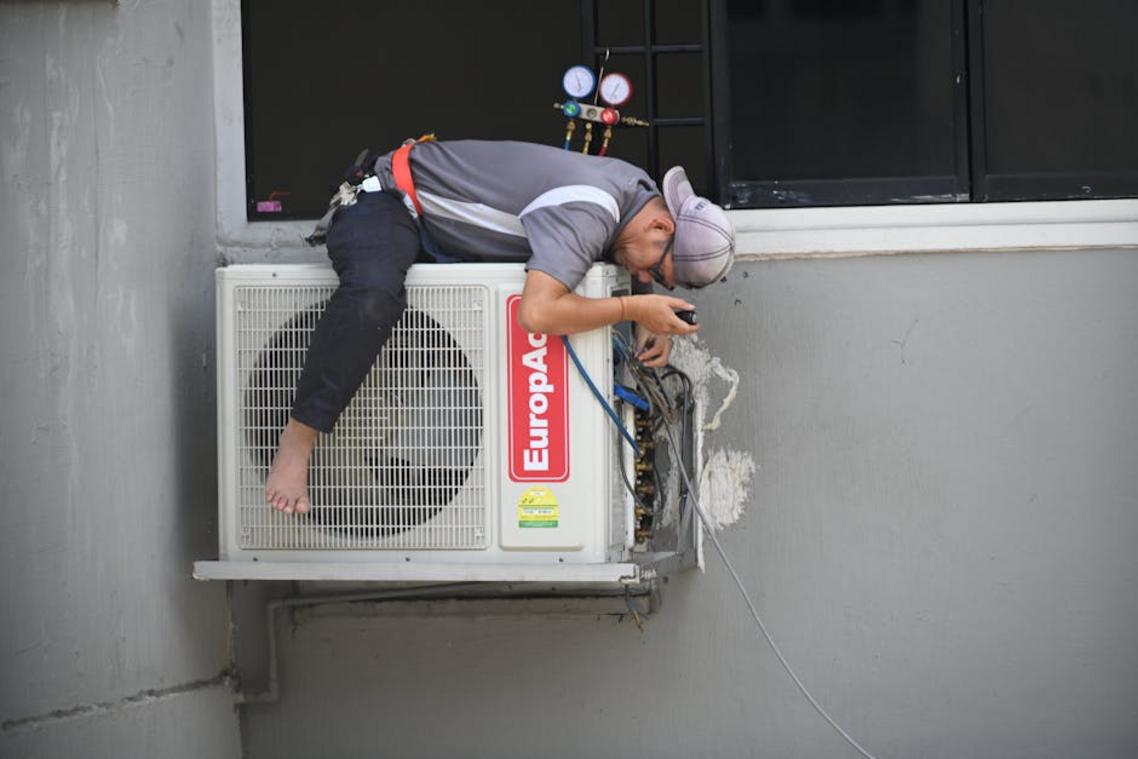
Two things will make or break your AC investment.
Size and efficiency ratings.
Get either one wrong and you’ll pay for it. Not just upfront but every single month when your energy bill shows up.
Some contractors will tell you bigger is always better. More cooling power means a cooler house, right?
Wrong.
An oversized unit actually creates more problems than it solves. It’ll cool your space too quickly and shut off before it can pull moisture from the air. You end up with a cold but clammy house (which feels worse than just being warm). Plus the constant on and off cycling wears out components faster.
According to the Air Conditioning Contractors of America, roughly 50% of residential HVAC systems are improperly sized. That’s not a small problem.
An undersized unit is just as bad. It runs nonstop trying to hit your target temperature and never quite gets there. Your compressor burns out early and your electric bill goes through the roof.
So how do you get it right?
You need a contractor who performs a Manual J load calculation. This isn’t some back of the napkin guess based on square footage. It’s a detailed analysis that factors in your windows, insulation levels, ceiling heights, local climate and even which direction your house faces.
No Manual J? Find a different contractor.
Now let’s talk efficiency.
The SEER2 rating tells you how much cooling you get per unit of electricity. Think of it like miles per gallon for your car. A higher number means lower operating costs.
Federal minimums vary by region but most areas require at least a 14 SEER2 for new installations. You can find units rated 16, 18 or even 20+ SEER2.
Here’s the math that matters. A 16 SEER2 unit uses about 13% less energy than a 14 SEER2 model. Over a 15 year lifespan, that difference adds up to real money.
I ran the numbers for a typical Chicago home. Upgrading from a 14 to a 16 SEER2 unit saves roughly $150 to $200 per year in cooling costs. The higher upfront cost usually pays for itself in five to seven years.
After that? Pure savings.
This is especially true if you’re thinking about should i replace my aircon appcproperty and wondering whether to go with the minimum or invest more upfront.
The right size plus a solid efficiency rating sets you up for years of reliable cooling without the sticker shock every billing cycle.
The Replacement Process: What to Expect from Start to Finish
Most homeowners tell me the same thing.
They’re not worried about the new AC itself. They’re worried about what happens during installation.
I get it. You’re letting strangers into your home to tear out old equipment and install new stuff. You want to know what’s coming.
Let me walk you through it.
Step 1: Finding the Right Contractor
You need at least three written estimates. Not phone quotes. Written ones.
Make sure each contractor is licensed and insured. Check their reviews on Google and the Better Business Bureau. (Yes, people still leave bad reviews there and they’re usually pretty honest.)
Don’t just go with the lowest bid. I’ve seen too many cheap installations turn into expensive problems.
Step 2: The In-Home Visit
A good contractor won’t give you a price without seeing your home first.
They should check your existing ductwork for leaks or damage. They’ll look at your insulation levels and electrical system. They need to understand your home’s layout and how air flows through it.
If someone gives you a quote over the phone without visiting? Walk away.
Step 3: Installation Day
Here’s what actually happens.
The crew removes your old unit and disposes of it properly. They place the new unit and connect all the refrigerant lines. Then they test everything to make sure it works.
Most installations take one day. Sometimes two if your setup is complicated.
You’ll hear noise. You’ll have people in and out. But it shouldn’t feel chaotic if you hired the right team.
Step 4: The Final Walkthrough
This part matters more than you think.
Your contractor should explain how to use your new thermostat. They need to hand over all warranty documentation. And they should tell you when to schedule maintenance.
If they rush through this part, that’s a red flag.
One more thing. Make sure your new system works with your existing fire detection system appcproperty setup. Some older smoke detectors can get triggered by sudden temperature changes during the first few days.
The whole process isn’t as scary as it seems. You just need to know what should i replace my aircon appcproperty questions to ask and what to expect at each step.
Making a Confident Investment in Your Home’s Comfort
You came here because choosing a new AC felt overwhelming.
I get it. This is a big decision that affects your daily comfort and your wallet. Nobody wants to mess this up.
But here’s the thing: it doesn’t have to stress you out.
You now have a clear path forward. Assess your needs first. Understand what options actually make sense for your space. Make sure the sizing is right (this matters more than most people think). Then find a professional you can trust.
That’s your checklist.
When you start reaching out to contractors, use what you’ve learned here. Ask the right questions. Compare proposals with confidence. You’ll know what to look for and what red flags to avoid.
This isn’t just about buying equipment. It’s about making a smart investment in your home’s comfort for years to come.
Take this knowledge and put it to work. Your future self will thank you when you’re sitting in a perfectly cooled home next summer.
should i replace my aircon appcproperty gives you the insights you need to make these decisions with confidence. Start your search today.
 Eryk Blaszczski