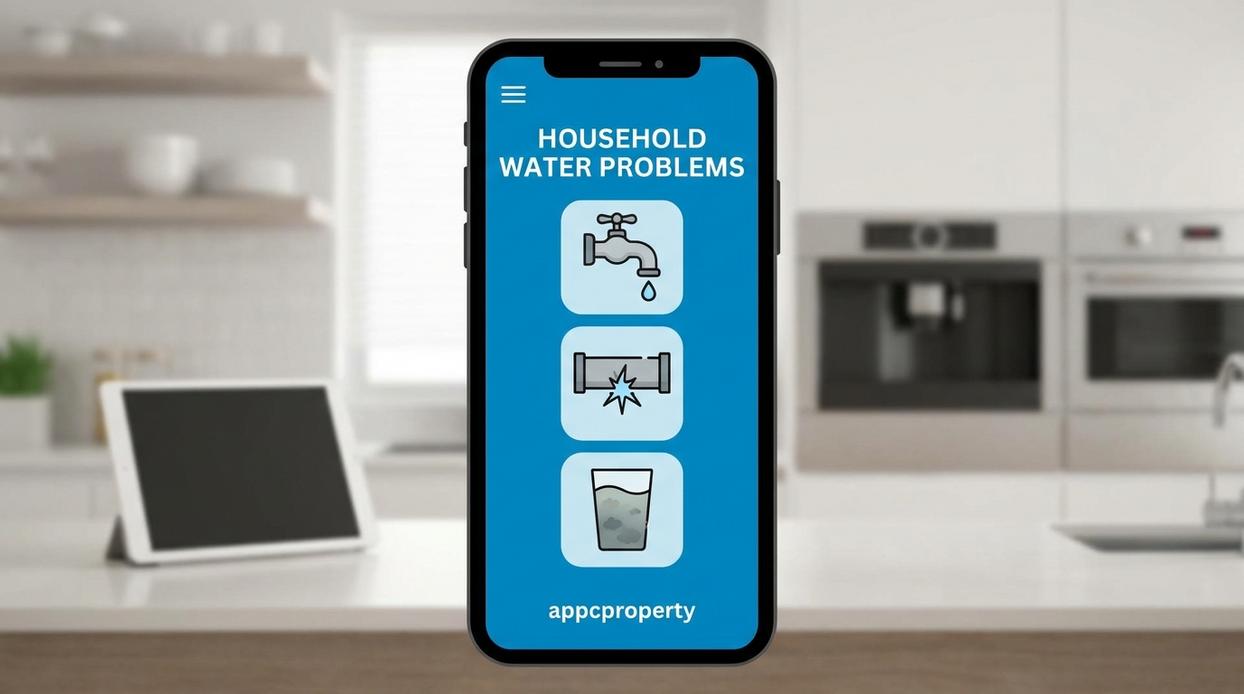
I’ve seen too many property owners discover water damage after it’s already cost them thousands.
You’re probably juggling water quality concerns and maintenance headaches right now. Maybe you’re wondering if your pipes are about to spring a leak or if that discolored water is actually safe. And don’t even get me started on tracking down contractors for repairs.
Here’s the reality: household water problems get expensive fast. And most property management tools either focus on one issue or make everything more complicated than it needs to be.
I spent years working in property technology. I’ve watched homeowners and property managers struggle with the same two problems over and over. Bad water quality that nobody catches early enough. And maintenance requests that turn into chaos.
This article shows you how one mobile app can handle both. Not in some theoretical way. In a way that actually works when your tenant calls about brown water or you need to track a plumbing issue.
You’ll learn what features matter, how to evaluate if an app like appcproperty fits your needs, and why combining water monitoring with maintenance management saves you more than just time.
No fluff about digital transformation. Just practical information about protecting your property and keeping your water systems running right.
Beyond the Filter: Why Real-Time Water Monitoring is Non-Negotiable
You turn on your tap and the water looks clear.
So you assume it’s safe.
But here’s what most people don’t realize. Your water can pass every visual test and still be loaded with stuff you don’t want in your body.
Lead. Chlorine byproducts. Hard minerals that slowly destroy everything they touch.
Some folks say the city tests their water regularly and publishes reports. They figure that’s good enough. Why worry about something the municipality already handles?
Fair point. But those reports show what left the treatment plant, not what’s coming out of your tap.
A lot happens between the plant and your faucet (especially if you live in a building with old pipes).
The Stuff You Can’t See
I’m talking about contaminants that build up over time. Lead leaching from old solder joints. Chlorine levels that spike during maintenance. Mineral deposits that turn your pipes into ticking time bombs.
The health effects? They don’t show up overnight. That’s the problem.
But your plumbing shows the damage faster. Corroded pipes. Water heaters that die years early. Dishwashers that need replacing when they should still have life left.
Add up those repair bills and you’re looking at thousands of dollars you didn’t budget for.
Basic pitcher filters help with taste. They don’t give you the full picture of what’s in your water right now.
Here’s where I think things are headed. Smart sensors and mobile apps will become standard in homes, just like smoke detectors. We’ll look back and wonder how we ever managed without real-time data on our household water problems appcproperty owners face daily.
You’ll get alerts before issues become expensive. Before your family drinks water that’s outside safe ranges.
That’s the shift from reacting to problems to preventing them entirely.
Unlocking Efficiency: Core Features of a Water & Property Management App
You want to know what actually matters in a water and property management app?
I’ll tell you what doesn’t matter first. Fancy interfaces. Fifty different color schemes. A dashboard that looks like a spaceship control panel.
What matters is whether the app stops you from getting a call at 2 AM about a flooded basement.
Some people will tell you that traditional property management works just fine. They’ll say you don’t need real-time monitoring or automated alerts. Just hire a good maintenance crew and check things manually once a month.
Here’s why that thinking falls short.
By the time you notice a problem manually, you’ve already lost money. Water damage doesn’t wait for your monthly inspection. Contaminants don’t care about your schedule.
I’m going to walk you through the features that actually prevent problems instead of just documenting them after the fact.
Real-Time Water Quality Dashboard
This is where everything starts.
Your app should track pH levels, TDS (Total Dissolved Solids), and temperature in real time. Not once a day. Not when you remember to check. Constantly.
Here’s what these numbers mean. pH tells you if your water is too acidic or alkaline (anything outside 6.5 to 8.5 is a red flag). TDS measures dissolved minerals and salts. High TDS can mean contamination or corroding pipes. Temperature spikes? That’s your first warning that something’s wrong with your water heater.
I recommend checking these metrics at least once a week even when everything looks normal. You’re building a baseline so you’ll spot changes fast.
Instant Leak and Contaminant Alerts
This feature SAVES you from catastrophic damage.
Push notifications hit your phone the second a leak gets detected or a contaminant level jumps. You’re not waiting for tenant complaints. You’re not discovering mold three months later.
When dealing with household water problems appcproperty managers face daily, speed is everything. A small leak can dump hundreds of gallons before anyone notices without sensors.
Get an app that lets you set custom thresholds. You decide what triggers an alert based on your property’s history.
Integrated Maintenance Ticketing System
Tenants need a simple way to report issues.
Low water pressure. Discolored water. Strange smells. They should be able to snap a photo, write two sentences, and submit a ticket right from their phone.
On your end, you assign the work order to your maintenance team and track it until completion. No more lost emails or forgotten voicemails (we’ve all been there).
I suggest choosing an app where you can see ticket history by unit. Patterns emerge. If Unit 3B reports low pressure every six months, you’ve got a pipe problem that needs real attention.
Filter and Appliance Health Tracking
Preventative maintenance beats emergency repairs every single time.
Your app should remind you when to change water filters, service water heaters, inspect sump pumps, and check pressure regulators. Set it once and forget it.
Most property managers I know lose track of this stuff across multiple units. An automated system means you’re not relying on memory or spreadsheets that never get updated.
Pro tip: Schedule these reminders two weeks BEFORE the actual due date. Gives you time to order parts and book contractors without rushing.
Historical Data and Reporting
This feature pays off in ways you don’t expect.
Long-term water quality data helps you spot trends before they become emergencies. It proves you’ve maintained the property properly (huge when dealing with insurance claims or legal issues). And it can actually increase resale value when you show buyers years of clean water quality reports.
I recommend exporting reports quarterly. Keep them organized by property and year. When you need to reference something from 18 months ago, you’ll thank yourself.
Look for apps that let you compare data across time periods. Seeing this month versus last month versus the same month last year tells you if seasonal changes are normal or if something’s breaking down.
The right app doesn’t just collect information. It turns that information into actions that protect your property and keep tenants happy. That’s the difference between a tool and a solution.
If you’re serious about property safety beyond just water, check out which fire detection system should i buy appcproperty for another layer of protection.
The Dual Benefit: A Win for Homeowners and Property Managers
Most property tech tries to serve everyone and ends up helping no one.
You’ve seen it before. A platform that claims to do everything but actually just creates more work for both tenants and landlords.
Here’s what I’ve learned running properties in Chicago.
When a system works for one side but not the other, nobody uses it. The tenant ignores it because it’s too complicated. The property manager abandons it because tenants don’t engage.
Some people argue you need separate tools for different users. They say homeowners want simple dashboards while property managers need complex reporting. So you should just pick your audience and build for them.
I disagree.
For homeowners and tenants, the value is simple. You get peace of mind knowing your water is safe. Your utility bills drop when appliances run efficiently (nobody likes paying for a toilet that runs all night). And you have actual data when something feels off instead of just guessing.
Health and safety aren’t abstract concepts when you’re raising kids in that space.
For property managers and landlords, it’s about stopping problems before they become expensive. Emergency repairs cost three times what scheduled maintenance does. I’ve seen it in my own buildings.
But here’s the real benefit. Tenant satisfaction goes up when issues get fixed fast. That means people stay longer. And if you’ve ever dealt with turnover costs, you know that retention is worth its weight in gold.
Plus you get a clear audit trail. When someone asks about maintenance history or safety compliance, you have answers. Not scattered emails and half-remembered phone calls.
The difference with a unified platform is that everyone looks at the same information. The tenant reports household water problems appcproperty through the same system where the manager tracks work orders. No disconnected apps. No playing telephone between three different tools.
It’s like having a fire detection system appcproperty that actually alerts both the resident and the building owner. Not one or the other.
When both sides win, the system actually gets used.
How to Choose the Right Application for Your Property
You’ve decided to add smart water monitoring to your property.
Now comes the hard part. Picking the right app.
I’ve tested dozens of property management applications over the years. Most of them promise everything and deliver about half of what you actually need.
The truth is, not every app works for every property type. What makes sense for a single-family rental might be overkill (or underpowered) for a 20-unit complex.
Here’s what I look at when I’m choosing an application.
Scalability matters more than you think. If you own one rental now but plan to grow your portfolio, you need an app that grows with you. I’ve seen property managers switch systems three times because they picked something that only worked for their current setup. That’s a waste of time and money.
Ask yourself: does this app handle a single-family home just as well as a multi-unit building?
Hardware integration is where most apps fall short. You can have the best software in the world, but if it doesn’t work with reliable smart water sensors, you’re stuck. I always check compatibility before I commit to anything. The sensors need to be easy to install too, because calling a plumber every time you add a unit gets expensive fast.
The user interface needs to work for everyone. You might be comfortable with technology, but what about your tenants? I’ve watched people struggle with apps that require a manual just to check their water usage. If it’s not intuitive, people won’t use it. Period.
Look for clean design and simple navigation. Both you and your tenants should be able to figure it out in under five minutes.
Support and security aren’t optional. When household water problems appcproperty issues pop up at 2 AM, you need a provider who actually responds. I check customer support reviews before I sign up for anything. Same goes for data security. You’re dealing with tenant information and property data. Make sure the provider takes that seriously.
Take Control of Your Property’s Health
You came here to understand how a mobile app could actually solve water quality problems and property management headaches.
Now you have that framework.
The old way doesn’t work anymore. You can’t keep guessing about what’s in your water or waiting for problems to show up. That’s how small issues turn into expensive disasters.
Real-time data changes everything. When you combine it with direct communication between tenants and property managers, you get something different. You get control instead of chaos.
These apps give you prevention instead of reaction.
Here’s what matters: You can see problems before they damage your property. You can track water quality without hiring a lab every week. You can manage maintenance requests without playing phone tag.
The technology exists right now. You just need to use it.
Stop relying on guesswork and reactive fixes. Look into a modern water and property management solution that gives you real data and real control. Your investment depends on it (and so does the health of everyone living in your building).
Explore household water problems appcproperty and see what real-time monitoring can do for your property.
Your tenants deserve clean water. Your property deserves better maintenance. You deserve peace of mind.
 Eryk Blaszczski